Is the Bible Reliable—or Just Religiously Preserved?
Few books in history generate as much confidence, controversy, or criticism as the Bible. Some view it as sacred Scripture. Others dismiss it as a text altered by centuries of copying, editing, and religious bias. But before asking whether the Bible is true, there’s a more foundational question:
Is the Bible reliable as a historical document?
This question doesn’t require belief. It requires evidence.
How Historians Evaluate Ancient Texts
Historians don’t expect original manuscripts to exist for the major works of antiquity. Instead, they rely on textual criticism, a neutral method used to reconstruct ancient writings based on three criteria:
-
Quantity – How many manuscript copies exist?
-
Dating – How close are those copies to the originals?
-
Consistency – How well do the copies agree with one another?
The Bible is judged by the same standards as Julius Caesar, Plato, or Homer. And when it is, something remarkable happens.
New Testament Manuscripts: An Embarrassment of Riches
The New Testament is supported by over 5,800 Greek manuscripts. When early translations into Latin, Syriac, Coptic, and other languages are included, the total exceeds 24,000 manuscript witnesses.
For comparison:
Yet no serious historian doubts what Caesar or Homer wrote.
Many New Testament manuscripts appear within decades, not centuries, of the original writings. The text spread rapidly across continents, creating an extensive manuscript network that allows scholars to cross-check accuracy with extraordinary precision.
Sign up for our email newsletter and be the first to get new episodes!
By clicking “Subscribe,” I have read and agree to the Privacy Policy
Copying Errors, Variants, and Transparency
Yes, scribes made mistakes. Misspellings, skipped lines, marginal notes. That’s expected in hand-copied texts.
But here’s the critical point:
The more manuscripts we have, the easier errors are to detect.
Over 99% of the New Testament text is consistent across manuscripts. Most variants involve spelling or word order, and no core Christian doctrine is affected.
Far from hiding these differences, scholars openly document them. The transparency of biblical scholarship is a strength, not a liability.
Legends Need Time—Christianity Didn’t Have It
A popular claim is that Christianity evolved into legend. But legends require time, distance, and silence.
The New Testament documents appear within the lifetime of eyewitnesses and were proclaimed publicly in hostile environments where correction was possible and expected. Claims about Jesus were challenged immediately, not generations later.
This is not how legends form.
The Dead Sea Scrolls and Old Testament Preservation
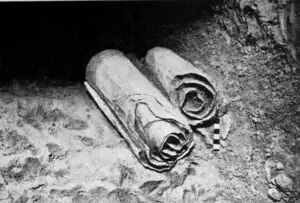 For centuries, critics assumed the Old Testament must have changed dramatically. That assumption collapsed in 1947 with the discovery of the Dead Sea Scrolls.
These manuscripts were over 1,000 years older than previously known Hebrew texts. When scholars compared them, the result was stunning: remarkable consistency in wording and meaning.
The scrolls didn’t prove theology. They proved preservation.
Archaeology and the Bible
Archaeology doesn’t prove miracles—but it does test whether a text accurately reflects history.
Cities once dismissed as fictional have been found. Rulers once doubted have been confirmed. Customs once questioned fit their historical context.
Legends usually fall apart when they meet the dirt.
The Bible keeps showing up in it.
Jesus Outside the Bible
Jesus is not confined to Christian sources. Non-Christian writers—including Roman historians and Jewish sources—acknowledge:
These writers were not sympathetic to Christianity. Their testimony carries weight precisely because it is hostile corroboration.
Why the Question Still Matters
After examining the evidence, one conclusion becomes unavoidable:
Most people don’t reject the Bible because the evidence is weak.
They reject it because the implications are strong.
By ordinary historical standards, the Bible is reliable. You don’t have to believe it’s inspired to admit it’s intact.
And once you do, the next question becomes unavoidable.